- The Morning Grind
- Posts
- 🦷 Asking about AI
🦷 Asking about AI
AI and patient consent, Building career paths that retain talent
Good morning. Gen Z apparently has more of a sweet tooth than any other generation, according to a new survey that found 72% of people in the youthful demo consume between one and six pieces of sweet snacks per day. For baby boomers, that number drops to 57%.
That’s some positive news for future dental services demand, if nothing else.
Inside this issue:
- AI and patient consent
- Building career paths that retain talent
⏰ Your reading time today: 6 minutes 13 seconds
🏆 Enjoy your coffee break with Word of Mouth, a dental-themed word game inspired by Wordle.
MARKETS
📈 3D Systems Corp ($DDD) – 1.97 | +0.12 (6.49%)
📈 Align Technology ($ALGN) – 180.67 | +9.57 (5.59%)
📉 Colgate-Palmolive ($CL) – 83.98 | -0.24 (0.28%)
📈 Dentsply Sirona ($XRAY) – 12.02 | +0.48 (4.16%)
📈 Envista Holdings ($NVST) – 26.91 | +1.30 (5.08%)
📈 Henry Schein ($HSIC) – 75.99 | +1.47 (1.97%)
📈 Park Dental Partners ($PARK) – 17.46 | +0.13 (0.75%)
📈 Straumann Holding AG (STMN.SW) – CHF 84.84 | +1.82 (2.19%)
📉 Weave Communications ($WEAV) – 4.85 | -0.23 (4.53%)
Stock data reflects market close yesterday, showing changes over the past five days.
THE DRILL DOWN
💸 Dental supply and equipment costs jumped 6% over the past year while staff wages rose just 2%, putting practices in a deepening cost squeeze as overall inflation held at 2%, per the ADA's Q1 2026 report, which also found that reimbursement rates were not keeping pace with inflation. The squeeze continues.
🚰 The Iran war is triggering fluoride shortages at U.S. water systems, with a water utility in Maryland forced to reduce fluoride levels due to disrupted supply chains and shortfalls from key suppliers, including one in Israel. Geopolitics, now affecting your tap water.
💰 Major dental organizations are asking Congress for more than $600 million in the 2027 budget for oral health funding, including $570 million for the National Institute of Dental and Craniofacial Research, $46 million for HRSA training programs, and $22 million for the CDC Division of Oral Health.
🔬 ADA updates its oral cancer detection guidelines, recommending clinicians prioritize comprehensive clinical exams over vital staining adjuncts, which the updated guideline says lack sufficient evidence to determine biopsy need.
🛡️ ADA raises red flags over the Centers for Medicare & Medicaid Services’ new CRUSH antifraud initiative, warning that a requirement forcing all providers to enroll in traditional Medicare to access Medicare Advantage plans could discourage dentist participation and undermine patient access to care.
🏠 Connecticut is considering a bill that would let hygienists treat patients in private homes, allowing those with at least two years of experience to provide services without dentist supervision.
⚖️ Texas AG sues dentists, marketers, and companies over a Medicaid fraud scheme, alleging they used gift card bribes to recruit patients and then performed unnecessary—and sometimes high-risk—treatments on children. A gift card scam with a dental twist.
Enjoying this newsletter? Subscribe for free (zero spam, just sharp dental insights) at www.themorninggrind.com
REGULATION
The AI consent question every DSO is about to face

Your AI tools are listening, transcribing, and summarizing. Your patients may not know that—and new lawsuits are bringing that issue to life.
Driving the news: A federal judge handed Heartland Dental a procedural win on a lawsuit revolving around AI transcription and analytics of patient communications done without what the plaintiffs alleged was proper consent, tossing a putative class action against the DSO and its phone vendor RingCentral.
The court let the case go, finding the AI features were treated as part of an ordinary phone service, but did acknowledge the underlying privacy concern was real enough to get into court in the first place. Public reporting suggests the plaintiff has since refiled.
What it means for you: The rise of new technology brings up new questions about patient data. As adoption increases, the question of whether patients need to be informed AI is being used in the course of their treatment is going to get asked again, and in tougher venues.
States like California, Illinois, and Washington require everyone on a call to consent before recording. A handful of states, including Texas and California, now have AI-specific disclosure rules on the books for healthcare settings.
Sharp HealthCare is facing a class action alleging an ambient AI scribe recorded exam-room conversations without proper consent.
Why it matters: AI is showing up everywhere in DSO operations—telephony analytics, ambient scribes, imaging assistants, chatbots, claims tools, patient outreach—and quietly capturing or generating patient information. The fact that most patients have no idea is becoming both a legal and reputational risk.
What you can do: Make sure as you roll out AI tools, you’re following a few basic practices to minimize potential patient consent landmines.
Inventory every AI tool in your practice. Phones, scribes, imaging, chatbots, billing, marketing. If you can't list them, you can't disclose them.
Tell patients, in plain English. Build AI mentions into call scripts, intake forms, in-office signage, and your website privacy page.
Give patients a choice. Train staff on a simple opt-out path, like manual notes or a non-recorded line, and document when patients use it.
Pressure-test your vendor contracts. Make sure your AI vendors can't use patient data to train their models or sell it downstream without your explicit say-so. Heartland's case turned in part on what a vendor was doing on the practice's behalf.
Know your strictest state. If you operate across state lines, your floor is whichever jurisdiction is toughest.
Bottom line: AI is moving into every corner of dental operations, and the practices that get ahead of disclosure and consent now will be best positioned to build trust with patients. The ones that wait will spend it explaining themselves to patients, regulators, or even a courtroom.
BUSINESS BITES
👔 Notable leadership changes: Sun Life named Tony Mollica as its dental business leader, An Nguyen is CareQuest’s new Chief Clinical Officer, PDS Health announced Brett Bingham as president of PDS Health Medical, Dental Care Alliance appointed Victoria Johnson as Chief Revenue Officer, and Greg Wappett joined 42 North Dental as Chief Development Officer.
📈 Deals and de novos: Heartland launched five de novos across the country, Seva Dental Team partnered with an Ohio practice, Bridge Dental Group expanded with two new partnerships in California.
🤖 Sonrava Health will deploy Overjet’s AI platform across its 450+ offices, bringing the technology to its network of over 1,200 providers.
💸 HeyDonto AI Technology closes $20M seed round at a $200M valuation, raising funds to expand Conduit, its interoperability platform connecting dental and medical providers for record sharing and RCM services.
🔬 Apex Dental Laboratory Group receives PE backing from LongueVue Capital and Swaney Group Capital, positioning the 16-lab, 12-state platform for continued growth.
💉 Havencrest Capital Management completes majority recapitalization of OFFOR Health, backing the in-practice pediatric dental anesthesia provider as it looks to expand access to care for children across more communities.
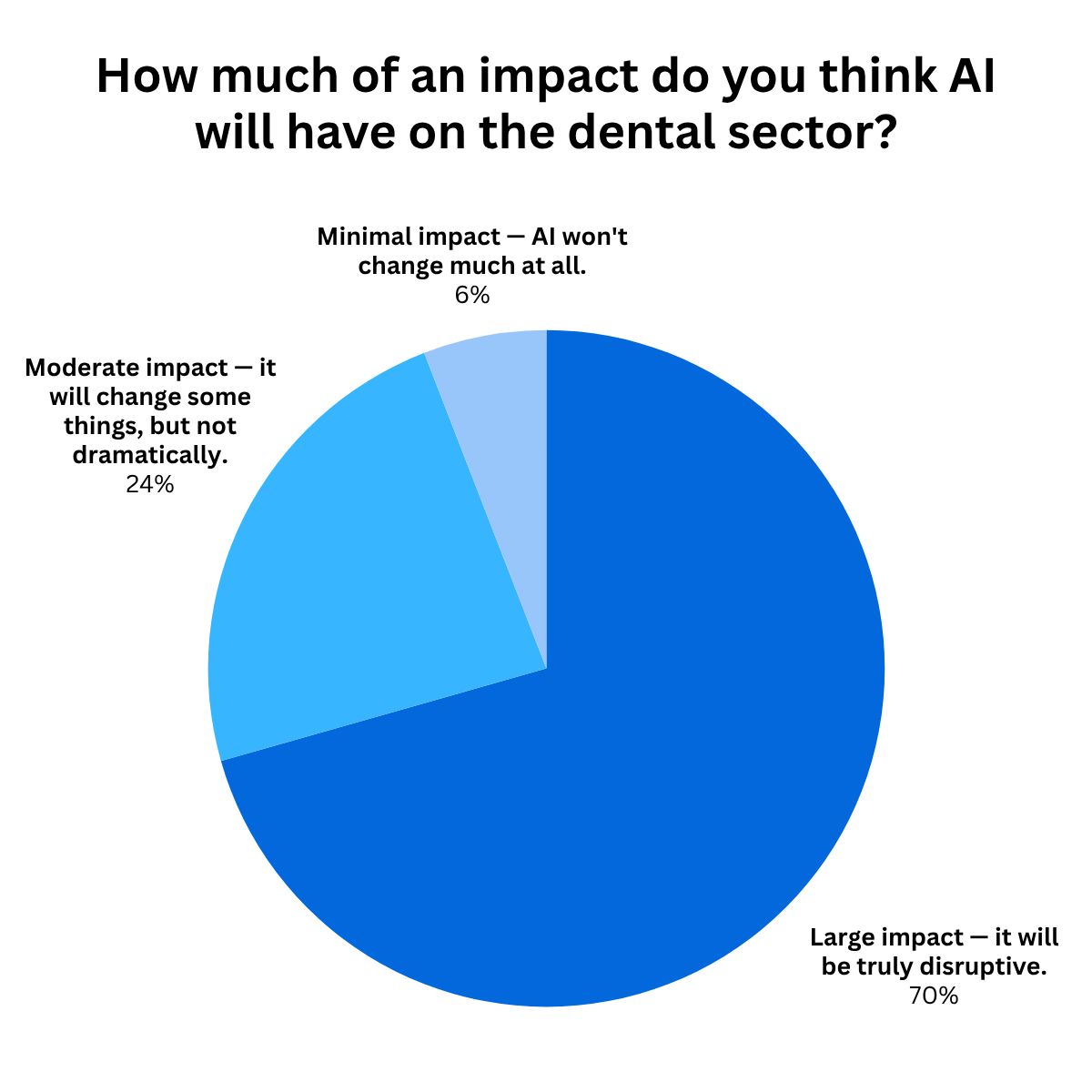
LAST ISSUE’S POLL RESULTS
PEOPLE
Amid a staffing crunch, retention requires more than a steady paycheck

You've benchmarked wages against the market. You've sweetened signing bonuses. But your best hygienists and early-career associates are still eyeing the exits. What gives?
What's happening: A research brief from the ADA Health Policy Institute found that new dentists working in affiliated private practice settings are roughly six times more likely to plan to leave than those in unaffiliated practices (48% versus 8%).
What’s driving that gap? Complaints about autonomy, influence on business decisions, clinical/nonclinical balance, career advancement, CE access, and workplace culture—in other words, career-path issues.
It’s a problem outside of dental, too. The Work Institute reports that "career" issues have been the leading category of employee turnover for 14 consecutive years, accounting for 18.9% of exits in its latest dataset.
Zoom out: It’s not just dentists who can easily job hop right now. A recent ADA survey found that more than 88% of dentists actively recruiting hygienists and almost 70% recruiting dental assistants rate the process as "very" or "extremely" challenging.” 58% of practices recruiting administrative staff called it very or extremely challenging.
Hygiene-specific research reinforces the point. A survey published in the Journal of Dental Hygiene found that lack of fringe benefits and lack of promotion opportunity stood out as salient weaknesses within broader job satisfaction, and higher satisfaction predicted lower intent to leave.
ADA HPI's own workforce shortage research notes that continuing education funds remain "rare overall" in dentistry, and that practices that do offer them tend to face fewer staffing shortages.
What it means for you: Dissatisfaction with career prospects is actually a strategic opening for smart DSOs to attract talent they otherwise may not be able to otherwise recruit. A well-designed career architecture is one of the few retention levers competitors can't match by cutting a bigger check. Here are some tactics to consider as you build this out:
Build visible ladders with real rungs. Every role should have levels defined by scope, competencies, pay bands, and milestone-based promotion criteria. Associates, hygienists, and admin each need their own track—not a generic org chart.
Offer dual tracks. Clinical-excellence and leadership paths let your best people grow without forcing everyone into management.
Turn admin into a career. Create explicit routes into office management, revenue cycle, and centralized shared-services roles.
Hold managers accountable. Managers are the linchpin for retention. If staff under one manager are consistently turning over at a higher rate, that’s a red flag. Track turnover by manager and make coaching a job requirement.
Bottom line: Paying market wages and offering competitive benefits are table stakes. In a tight, highly mobile labor market, the operators winning the staffing war are going beyond that and giving people a clear path to advance in the organization.
🗳️ The Check-up:
⬆ VOTE: How much of an issue has retention been for your organization? |
CLINICAL NOTES
😬 Treating a common jaw disorder may cut cortisol levels by more than 40%, according to a study published in the Journal of Prosthetic Dentistry that links Disclusion Time Reduction therapy for patients with temporomandibular disorders (TMD) to significant reductions in salivary cortisol, a key biological marker of stress. Turns out fixing your bite might fix your nerves, too.
🫀 Regular dental care is linked to fewer complications and lower liver cancer risk in cirrhosis patients, with a VA study of nearly 48,000 veterans finding that those who received routine cleanings had better outcomes.
👁️ Chronic exposure to high-intensity dental lighting may raise the risk of serious eye conditions, including age-related macular degeneration and glaucoma, with a survey of dentists suggesting that sustained photodamage can destabilize the blood-retinal barrier. Be sure to protect your eyes while fixing teeth.
🦠 Periodontal disease is positively associated with at least eight cancers, including colorectal, pancreatic, gastric, and bladder, according to a meta-analysis of 26 cohort studies and roughly 16 million participants.
FUN AND GAMES

BEYOND THE CUSP
You may have seen Miss Thailand’s unfortunate on-stage incident with what appeared to be her veneers falling out. This dentist explains what really happened.
Nine dental companies made the Inc. Regionals list of the fastest-growing private companies in the U.S., including Lollipop Pediatric Dentistry, Elevate Dental Partners, Sunbit, and Planet DDS.
The top-ranked dental schools in the world.
Say cheese: Drug dealer busted after sending photo of “Turkey teeth” to friend in jail.
A biologist explains why humans have wisdom teeth.