- The Morning Grind
- Posts
- 🦷 New year, new regs
🦷 New year, new regs
Good morning. Archaeologists in Italy just analyzed teeth from Iron Age inhabitants near Naples, and found—likely because of trade with other Mediterranean societies—they had diverse diets that included legumes, cereals, and “abundant carbohydrates and fermented foods.”
Sounds like the ancient Etruscans may have had better diets than some of the patients you’ll see in the chair today.
Inside this issue:
- California’s new PE and MSO rules
- The risks and rewards of AI voice tools for DSOs
⏰ Your reading time today: 6 minutes 13 seconds
🏆 Enjoy your coffee break with Word of Mouth, a dental-themed word game inspired by Wordle.
MARKETS
📈 3D Systems Corp ($DDD) – 2.76 | +0.39 (16.46%)
📈 Align Technology ($ALGN) – 171.49 | +1.76 (1.04%)
📈 Colgate-Palmolive ($CL) – 84.52 | +2.61 (3.19%)
📉 Dentsply Sirona ($XRAY) – 12.21 | -0.66 (5.13%)
📈 Envista Holdings ($NVST) – 25.24 | +2.21 (9.60%)
📈 Henry Schein ($HSIC) – 79.98 | +3.81 (5.00%)
📈 Park Dental Partners ($PARK) – 15.13 | +0.28 (1.89%)
📉 Straumann Holding AG (STMN.SW) – CHF 97.28 | -4.27 (4.20%)
📉 Weave Communications ($WEAV) – 6.65 | -0.46 (6.54%)
Data is provided by Google Finance. Stock data reflects market close yesterday (or 01/16/2026 for U.S.-traded stocks), showing changes over the past five days.
THE DRILL DOWN
🩺 New York's governor signs legislation allowing experienced hygienists to practice unsupervised, enabling hygienists to enter collaborative practice agreements to provide services independently of dentists in certain locations.
💸 Idaho's governor proposes Medicaid dental cuts to address budget shortfalls, suggesting reductions to services that could impact adults and people with disabilities as the state faces significant fiscal challenges. Hard to fill cavities when the budget's already had a root canal.
🦷 Michigan licenses its first dental therapist, joining around a dozen states that have created a pathway for dental therapists to do routine dental care with less training than dentists, despite ADA opposition to expanding the program.
💰 California coalition rallies to protect Medicaid dental funding, with more than 50 industry and patient groups calling on the state legislature to reject proposed cuts to the Medi-Cal Dental program. Dental is turning into a budget battleground.
🤖 Neocis marks a milestone with over 100,000 osteotomies completed with its Yomi robotic dental system, the first robot-assisted dental surgery product cleared by the FDA.
Enjoying this newsletter? Subscribe for free (zero spam, just sharp dental insights) at www.themorninggrind.com
REGULATION
California puts MSOs under a microscope
A new year brings a fresh start, a renewed commitment to our personal goals, and, of course, new laws that could impact our businesses, like the ones that just took effect in California.
What happened: California just flipped the switch on two laws targeting private equity-backed platforms and management services organizations (MSO) in healthcare: SB 351 and AB 1415. Not names that exactly roll off the tongue, but both laws come with serious implications for the dental industry.
SB 351 puts teeth behind California's corporate practice of medicine/dentistry rules. It prohibits any private equity group or hedge fund "involved in any manner" with a physician or dental practice from interfering with clinical judgment or exercising control over activities that look suspiciously like standard DSO operations—coding and billing decisions, payer contracting parameters, patient record control, and clinical hiring decisions based on competency.
AB 1415 expands who must give written notice prior to closing certain transactions involving healthcare entities or MSOs, which it defines in terms DSOs will recognize immediately: entities providing management support, including "provider rate negotiation, revenue cycle management, or both." The law requires written notice 90 days before closing certain transactions involving healthcare entities or MSOs. If regulators opt to conduct a cost and market impact review, implementation gets delayed 60 days after their final report. Translation: Your deal timeline just got less predictable.
Why it matters: These laws land exactly where DSOs feel it—governance and deal friction.
First, governance is now a "show your work" exercise. SB 351 narrows the lane for influence over practices, adding risk that your standard agreements with clinics, board rights, or operating cadence could be read as directing the clinical operations the statute flags: coding, billing, payer contracting, and productivity expectations.
Second, transaction timelines in California just became harder to forecast. AB 1415 expands who must notify regulators, and the review process can stretch beyond simple filing. Even when the state can't block deals outright, you're managing closing risk, disclosure risk, and timing risk that didn't exist two years ago.
The national angle: California may be a preview of things to come nationwide. Other states are already moving in parallel, reviving corporate practice rules with modern MSO language while adding transaction oversight that slows consolidation.
Oregon's SB 951 explicitly targets private equity-backed MSO control dynamics.
Massachusetts enacted H.5159 last year, strengthening market review around healthcare transactions.
Indiana rolled out new ownership reporting requirements and authorized investigations into concentration of ownership in healthcare.
What you can do now: For multi-state DSOs, now is the time to prepare for the coming patchwork of state-level "who controls what" tests plus more pre-close notice regimes.
Run a control rights audit. Map every decision your DSO touches and document where licensed clinical leadership has final authority, and compare against state-level rules.
Rethink restrictive covenants. If you rely on noncompetes or non-disparagement clauses in California, review whether SB 351 puts them in the penalty box.
Create a state overlay playbook. California clauses won't satisfy Oregon or Massachusetts. Build modular governance and services agreements that flex state-by-state without repapering your entire platform every legislative session.
Bottom line: The DSOs that win here will treat clinical autonomy as a designed system with documentation, enabling them to move faster when the next state legislature starts asking questions, which puts a premium on education and case presentation.
Share this article: https://www.themorninggrind.com/p/california-puts-msos-under-a-microscope
BUSINESS BITES
👔 Notable leadership changes: Henry Schein appoints Frederick Lowery as CEO, Dentsply Sirona adds Mark Bezjak as the group vice president of its Americas regional commercial organization, and Patrik Eriksson will become the new North American president of Patterson Dental.
🛠️ Solmetex acquires ReLeaf, a maker of hands-free evacuation devices for clinics; financial terms were not disclosed.
📍 Park Dental Partners expands, landing its first practice in Arizona with the acquisition of Sunlight Dental and adding Weddell Dental in Minnesota. That’s an all-weather expansion if we’ve ever seen one.
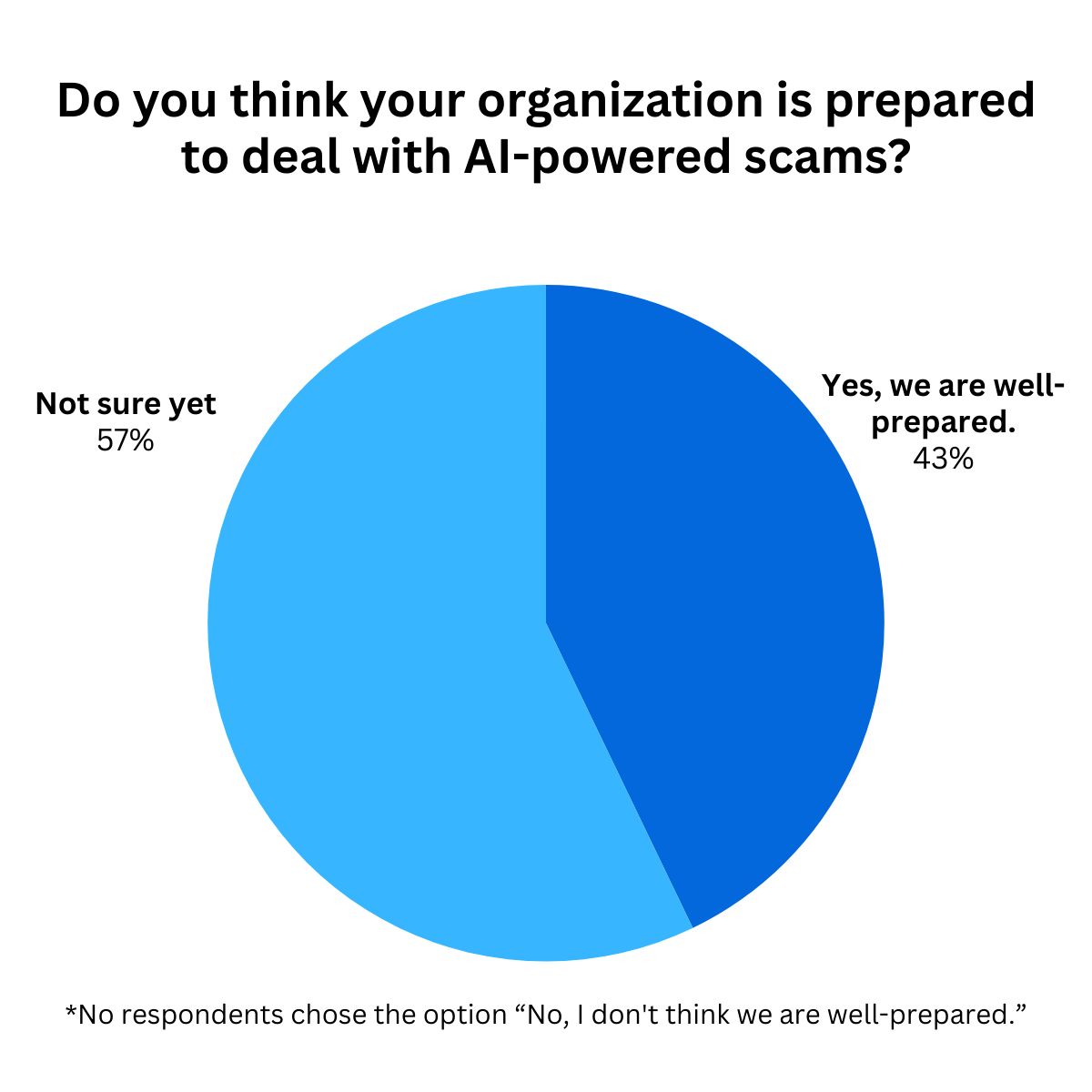
LAST ISSUE’S POLL RESULTS
TECH
The risks and rewards of hiring an AI helper to staff your phones
The call is coming from inside the dentist’s office—but this isn’t the climax of an odontologically themed spooky story; it’s a new application of sophisticated artificial intelligence that more dental practices are exploring.
What’s happening: A growing number of DSOs and multi-site groups are piloting AI voice agents to handle front desk tasks, like answering calls, booking hygiene and new-patient appointments, confirming and rescheduling, chasing unscheduled treatment, and routing “Do you take my insurance?” questions to the right workflow.
These products leverage rapid improvements in the capabilities of large language models (LLMs) to push automated response systems well beyond frustrating “Press 1 for …” phone trees and closer to human-like, conversational interactions.
Why it’s happening: Staffing challenges, profit and loss considerations, patient habits are all factors pushing healthcare organizations to explore voice AI systems.
Call analytics suggest dental organizations miss about a quarter of inbound calls, sometimes more. An always-available voice AI receptionist solves that.
Patients want to schedule appointments on their own time, and this often means after dental offices are closed. One academic study found 29.5% of self-scheduled appointments are booked after business hours.
Even finding staff to answer phones has become more challenging (and, for some, cost-prohibitive). The ADA reported recently that staffing issues and increasing overhead were among dentists’ top concerns heading into 2026.
Why it matters: AI voice systems open the door to a major upgrade to the patient funnel that can translate into a healthier bottom line without having to recruit and hire new full-time staff.
Houston Methodist’s innovation team reported that their AI voice assistant achieved a 91% automation rate for a high-volume hotline and answered 100% of calls on the first ring, eliminating abandonment during peak hours.
Early vendor-reported case studies in dentistry also show promise, with DSOs increasing their bookings and achieving a healthy ROI on voice AI systems without adding marketing spend or staff.
Yes, but: When it comes to AI, patients have boundaries. In a 2024 Talkdesk survey of 1,000 U.S. adults, 81% preferred a human for medical advice, 74% wanted to discuss personal health information with a person, but 42% were okay with AI scheduling routine appointments.
The top worries were inaccurate answers (26%), data privacy (24%), and losing the human touch (24%).
What to look for in vendors: If your voice AI system is going to be answering calls, you need to treat the search for the right system the same way you’d treat the search for a front-desk assistant, that is, with plenty of care. Here are some features to pay attention to:
Tight scoping: Hand over basic jobs to the AI for tasks that will improve the patient experience, like scheduling after hours or when the phone is busy, providing conversationally accessible office information, and basic billing logistics.
Human handoffs: Allow callers to speak to a person early to avoid frustration, and route emergencies and clinical complaints directly to humans. Don’t force people to mash the “0” key on their phones trying to reach someone.
Robust integrations: A stand-alone voice AI that can take calls may be a cool trick, but in a silo, it’s not going to do much for your business. Bookings should write back to the practice management system, and exceptions should be passed off gracefully to a human to handle.
Show me the metrics: Make sure you have access to a dashboard that can track answer rates, abandonment, booking conversion, time-to-appointment, and follow-up completion by location. You want to be able to spot any problems as soon as they emerge.
What’s next: As voice agents get better at holding natural, context-aware conversations, they can shift from “front-desk overflow” to a scaled extension of your care team. A recent article identified a number of potential next-gen use cases: multilingual care outreach to patients, perio maintenance reminders personalized to individual patients' circumstances, and automatic post-appointment check-ins. These use cases may not yet be ready for prime time, but it’s an exciting preview of things to come.
🗳️ The Check-up:
⬆ VOTE: Have you tried using AI voice tech in your organization? |
CLINICAL NOTES
🍬 A sugarcane-derived artificial saliva mouthwash may help protect the teeth of head and neck cancer patients undergoing radiotherapy, with researchers saying the formulation significantly reduced bacterial activity and mineral loss in animal testing. That’s some sweet news.
🦷 Starting tooth brushing by age one may significantly lower the risk of early childhood caries, according to a new systematic review, which also found that brushing at least twice daily offers the greatest protective benefits.
📸 New ADA recommendations confirm dental imaging should only be ordered when clinically necessary, the organization's first guidance on patient selection for radiographic exams in over a decade. Examine first, image second.
💔 Severe childhood dental decay and gingivitis are linked to a higher risk of atherosclerotic cardiovascular disease in adulthood, with more severe childhood dental caries linked to worse health outcomes in adulthood, according to a pioneering cohort study that looked at data from 568,778 people in Denmark.
🦷 The number and condition of your teeth may predict how long you live, according to a Japanese study of more than 190,000 adults aged 75+, which showed those with no remaining teeth faced roughly 1.7x higher mortality risk.
FUN AND GAMES

BEYOND THE CUSP
The AGD released their list of “10 Dentists to Watch” in 2026.
What’s going on with WWE star Brock Lesnar’s teeth?
Sharks famously strong teeth may be weakening because of ocean acidification.
In what may be the first case of its kind, a woman in Malaysia was found to have bilateral fusion of her permanent lower jaw lateral incisors and canines.
Just for fun: The 30 best live albums of all time.