- The Morning Grind
- Posts
- 🦷 What your patients want in 2026
🦷 What your patients want in 2026
Good morning. Don’t tell our dentist, but much of our Christmas was spent shamelessly indulging in every variety of sugary baked good and sweet treat. But hey, that’s what the holidays are for. We hope you’re feeling rested, recharged, and ready to get back on the grind with us (lame pun very much intended) in 2026.
Inside this issue:
- 7 dentistry trends in 2026
- AI scams come for dentistry
⏰ Your reading time today: 6 minutes 51 seconds
🏆 Enjoy your coffee break with Word of Mouth, a dental-themed word game inspired by Wordle.
MARKETS
📈 3D Systems Corp ($DDD) – 1.99 | +0.20 (11.07%)
📈 Align Technology ($ALGN) – 160.13 | +1.87 (1.18%)
📉 Colgate-Palmolive ($CL) – 76.93 | -3.03 (3.79%)
📈 Dentsply Sirona ($XRAY) – 11.61 | +0.20 (1.75%)
📈 Envista Holdings ($NVST) – 22.55 | +0.60 (2.73%)
📈 Henry Schein ($HSIC) – 78.54 | +2.21 (2.90%)
📈 Park Dental Partners ($PARK) – 15.25 | +0.55 (3.74%)
📈 Straumann Holding AG (STMN.SW) – CHF 94.30 | +1.16 (1.25%)
📈 Weave Communications ($WEAV) – 7.18 | +0.015 (0.21%)
Data is provided by Google Finance. Stock data reflects market close at 5:00 p.m. ET, showing changes over the past five days.
THE DRILL DOWN
💻 Planet DDS launches MyTooth, a patient experience layer built natively for Denticon, allowing patients to complete forms and book appointments without disrupting existing operational workflows. Taking the “wait” out of the waiting room.
🔒 Teledentistry provider Dentistry.One suffers data breach, exposing sensitive information including Social Security numbers of an undisclosed number of people across the more than 43,000 dental practices using its service.
🛡️ Western Dental sounds the alarm over Medi-Cal dental funding, warning that cuts to the program in the state’s upcoming budget could threaten the viability of up to 50 practice locations in the state.
🩺 The American Dental Hygienists’ Association (ADHA) pushes for self-regulation of dental hygienists, advocating for the profession to oversee its own education and licensure to enhance public protection and access to care. Hygienists want to be entrusted to keep their industry clean.
🤖 The American Academy of Artificial Intelligence in Dentistry launches, a new non-profit organization with a mandate to advance the “safe, ethical, and evidence-based use of AI in oral healthcare” led by Owais A. Farooqi.
🍑 Georgia's new teledentistry law takes effect, allowing licensed dentists to provide remote services while being regulated by the Georgia Board of Dentistry starting January 1, 2026. The Peach State has joined the call.
Enjoying this newsletter? Subscribe for free (zero spam, just sharp dental insights) at www.themorninggrind.com
TRENDS
The 2026 Playbook: Seven trends shaping what patients want
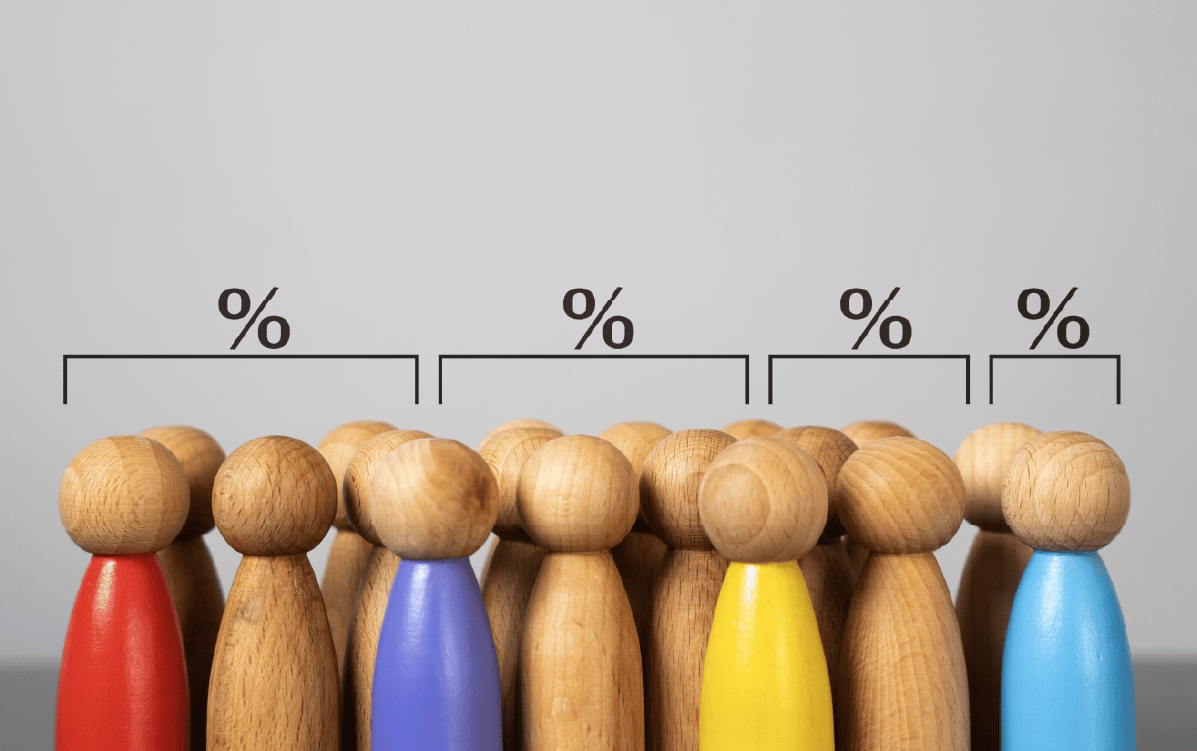
Your patients are starting the new year with evolving expectations of their dentist. Are you ready to meet them? We analyzed consumer surveys, industry research, and booking behavior to identify seven trends most likely to shape what patients want from their dental care in 2026.
1) The digital front door becomes more important than ever.
What’s changing: Patients expect online scheduling, two-way texting, digital intake, and mobile payments as table stakes. Reviews and photos matter more than ever to establish credibility. More practices will roll out AI-powered voice systems to offer patients on-demand service, check benefit plans, and more.
Why it’s happening: Consumers now shop for care like any other service, with mobile-first behavior and little patience for friction. Marketplaces and modern practice tech have trained patients to expect self-serve access and fast responses.
2) The cost conversation comes first.
What’s changing: Patients push earlier for real out-of-pocket estimates, cheaper alternatives, and payment paths before they emotionally commit to treatment.
Why it’s happening: Affordability pressure remains high, and dental benefits are confusing. Patients try to avoid “surprise bills,” so they demand transparent pricing, options by tier, and financing or membership plans that turn an uncertain expense into a predictable one.
3) Dental care becomes part of overall, whole-health care.
What’s changing: Patients increasingly understand that oral health affects overall health and want prevention plans that feel personalized, not one-size-fits-all hygiene recall. Salivary testing will play a bigger role in driving treatment plan acceptance.
Why it’s happening: Public awareness of oral-systemic links is rising, and people want fewer big procedures later. Meanwhile, new screening and prevention products are heavily marketed, which increases curiosity and expectations, even when clinical utility varies.
4) Patients want anxiety-aware care.
What’s changing: More patients openly request comfort options, gentle pacing, and judgment-free care. They expect the practice to anticipate anxiety rather than react to it.
Why it’s happening: Dental avoidance due to fear is common, and patients are more comfortable naming anxiety in healthcare settings. Social proof and reviews also reward practices that communicate clearly, minimize discomfort, and create a calmer experience.
5) Cosmetic dentistry demand shifts toward “natural.”
What’s changing: Patients want subtle improvements, fewer irreversible procedures, and “before/after” proof that looks believable, not extreme.
Why it’s happening: Social media widened interest in esthetics while simultaneously increasing skepticism and safety concerns. Consumers want results that fit their face and age, and they are more sensitive to long-term trade-offs. Minimally invasive options and conservative planning now carry more weight.
6) Clear aligners become the default ortho conversation with more price tiering.
What’s changing: Patients assume clear aligners are on the menu and increasingly ask for cheaper tiers, fewer visits, and transparent timelines.
Why it’s happening: Clear aligners have become culturally normalized, and more providers can offer them. At the same time, household budget pressure pushes patients to comparison shop within the category, creating demand for a menu of options, not a single premium product.
7) Demand for tooth implants rises.
What’s changing: More patients treat implants as a normal option to discuss, not a last resort, and they expect natural esthetics plus clear financing.
Why it’s happening: Aging demographics, higher esthetic expectations, and improved outcomes are all pulling demand forward. Patients also want durable solutions that reduce repeat work over time, but they need cost clarity and confidence in the process, which puts a premium on education and case presentation.
BUSINESS BITES
💰 Dentira secures an investment from Vista Equity Partners, the terms of which were undisclosed, to accelerate its AI and automation software development.
❤️ Heartland Dental launches the Orahh Care Dental Community, a new opt-in professional association for its supported dentists that promises shared resources and training.
💵 Absolute Dental agrees to a $3.3M settlement in a class-action lawsuit over a data breach affecting more than 1.2 million individuals, with potential payouts of up to $5,000 per class member. That’s an expensive lesson in cybersecurity.
LAST ISSUE’S POLL RESULTS

TECH
AI scams are coming for dentistry
Your front-desk staff receives a call from a voice that sounds a lot like a top regional exec demanding they immediately share a password for a critical account. For most office staff, hanging up on a corporate VIP will sound like a bad career move, but what happens next could cost you millions of dollars, months of downtime, and the trust of your patients.
What’s happening: Cybercriminals are using generative AI to crank out more believable scams at higher volume, and the dental industry has become a target.
Attackers use AI tools to clone the voice and likeness of trusted people, which can then be used to run sophisticated phishing campaigns against businesses.
Healthcare is a magnet for attackers because of the sensitivity of patient data, which can be used for identity theft and fraud. The Department of Health and Human Services tracked more than 530 cyberattacks on the U.S. healthcare sector over a six-month period in 2023–24, nearly half ransomware-related.
The state of play: The dental industry has already been targeted by relatively simple versions of these scams. Reports of data breaches at practices and DSOs are now a regular occurrence.
Attackers will sometimes pose as patients and send infected PDFs to dental offices that install malware when opened. In another case, the ADA warned attackers were sending phishing emails threatening membership suspension unless the recipient clicked a link to a “payment advice document,” which then infected their systems.
The AI evolution: Generative AI is giving cybercriminals a copywriter, translator, researcher, and voice actor in one. AI tools can be used to automate phishing attacks, clone voices, and create deepfake videos to mimic execs, and even spin up entire fake businesses that look like legit operations.
Why it matters: As DSOs adopt more digital systems, the surface area for cyberattacks is growing, and the consequences of a successful one are becoming more severe.
A breach in the healthcare space costs victims, on average, $7.42 million and takes 279 days to resolve, according to an IBM report.
How to protect yourself: Responding to this threat isn’t complicated, but it does take a disciplined commitment to cybersecure practices. Here are some practical, dental-operator-friendly tactics you can implement now:
Update your training. Improve your staff’s cybersecurity training to account for AI tech. Your team should assume phishing emails will look perfect and that even phone calls with a familiar, trusted voice could be scams. “Verify, verify, verify” should be everyone’s default, and if you aren’t sure, confirm instructions with someone in person or on a known phone line.
Harden identity. Require multifactor authentication (MFA) everywhere, and use phishing-resistant options for admins and finance roles where feasible.
Lock down password resets and MFA changes. Use callback verification and documented approval before resets, new device enrollments, or access changes.
Add friction to money movement. Require dual approval for ACH/wire changes, and verify bank detail changes out of band using known phone numbers.
Treat attachments like biohazards. Train teams to slow down on emailed attachments claiming to be “forms,” “invoices,” and “payment advice documents,” especially those with urgency language.
Back up like you mean it. Keep encrypted, offsite copies and test restores.
Bottom line: AI is upgrading the con artist’s toolkit with faster scams, cleaner language, and more believable impersonation. You don’t need to become a cybersecurity company, but you do need the right protocols that can verify identity without relying on traditional signals of legitimacy.
Share this article: https://www.themorninggrind.com/p/ai-scams-are-coming-for-dentistry
🗳️ The Check-up:
⬆ VOTE: Do you think your organization is prepared to deal with AI-powered scams? |
CLINICAL NOTES
🦷 CAD-CAM subperiosteal implants may offer a reliable alternative for patients with severe bone atrophy, achieving a high survival rate of 99.17% according to recent findings and promising fewer complications than traditional bone augmentation procedures.
🔍 Intraoral scanners can match traditional visual exams for detecting cavities in kids' teeth, according to a new study that found high agreement between on-screen 3D model assessment and the dentist's eye, with added fluorescence imaging boosted early-stage detection by 30%.
🍅 Lycopene—the antioxidant that gives tomatoes their red color—may be linked to a lower risk of severe gum disease, a new study found, with older adults that have sufficient dietary lycopene intake experiencing 67% lower odds of severe periodontitis. Another reason to say yes to the marinara.
🩺 Surgeons in Israel successfully removed a 2.3-inch tumor attached to the jaw of a newborn, described as “the largest of its kind and location ever-described in medical literature.”
FUN AND GAMES

BEYOND THE CUSP
TIME named this electric toothbrush one of the best inventions of 2025.
A deep dive into the long history of dentistry (dating back 14,000 years).
Researchers in Japan are running human clinical trials to test whether a drug can regrow teeth.
Want to get caught up on the latest AI developments? Pour yourself a big cup of coffee and dig into this review of the last year.
Just for fun: 18 of the most striking images from 2025.